
In the often-complex contact centre environment getting the basics right is essential. Our contact centre planning tools deliver solid, rule-of-thumb indicators.
Inbound Contact Centre planner (Synchronous contact)
Our inbound contact centre calculator helps you to plan synchronous contact; communications – also known as immediate demand – where agents and customers ‘talk’ in real time such as telephone calls and web chat. It provides you with an indication of the number of agents needed in your contact centre to meet a service target level.
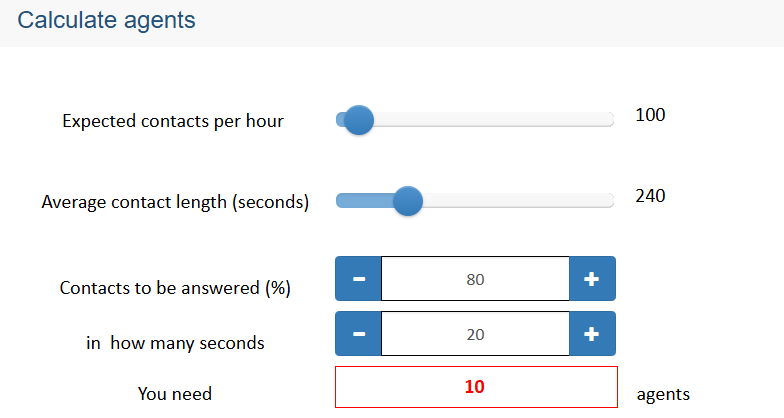
This tool implements the Erlang C formula. Erlang calculators have typically been used to approximate staffing requirements for telephone calls (Call Centres) but are equally applicable for any synchronous contact – phone call, web chat, video call – where the caller chooses when to call and all parties are ‘conversing’ in real time.
Outbound Contact Planner (Predictive Dialler)
The outbound contact calculator helps you to plan outbound contact; communications where agents and customers ‘converse’ in real time. This calculator assumes the use of contact centre automation technology such as a predictive dialler or click-to-dial agent support It provides you with an indication of the number of agents needed in your contact centre to meet campaign targets.
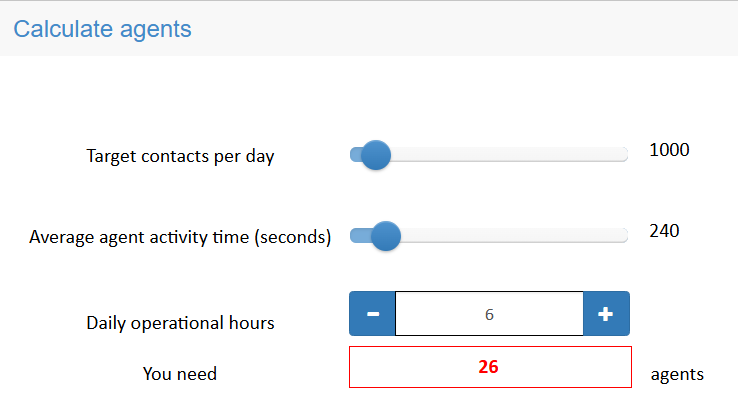
This calculator assumes the use of contact centre automation technology such as a predictive dialler or click-to-dial agent support It provides you with an indication of the number of agents needed in your contact centre to meet campaign targets.
Digital Messaging Contact Centre planner (Asynchronous contact)
As contact centres adopt a digital-first contact strategy our Digital Messaging Calculator supports your plans for asynchronous contact – also known as deferable demand – where agents and customers ‘talk’ in turn. Examples include text messages and WhatsApp. This calculator provides you with an indication of the number of agents needed in your contact centre to meet your customer demand.
This tool implements Little’s Law to calculate agent requirements. Little’s Law is used to approximate staffing requirements for general queuing systems and is applicable for any asynchronous contact – email, text message, scheduled call – where the contact centre chooses when to respond to a message request.